
Approach to Lab Haematology - Certificate Course
This course provides a comprehensive approach to haematology, covering all the essential topics needed to build a strong foundational understanding. The structured modules integrate core knowledge with case-based learning, which is crucial for developing diagnostic and interpretative skills. This combination ensures a solid base upon which deeper expertise in haematology can be developed.
The approach is based on methods developed by the trainer over > 20 yrs of experience in lab haematology combined with years of teaching postgraduate and undergraduate students. Everything is reclassified in ways that would make it practical and easy to remember. You would have a direction on how to approach haematology cases, what tests to ask for after doing the base line investigations and how to interpret the specialised tests. The case discussions would help us "test" the methods that we have learnt and see if they can be applied effectively.
INR 10,000 (Inclusive of Taxes)
EMI options available through the payment Gateway.
Duration: 100 hours over 6 months (Weekly live sessions)
Advance your professional development with internationally recognised certification
A Program Designed to Inspire, Enhance, and Advance Your Expertise in Lab Haematology
Course Highlights
Learning Objectives
Upon successful completion of this programme, learners will be able to:
Details
This is a foundation course, for post graduates in pathology and practising Pathologists. It would help you interpret haematology reports with confidence and enhance your “pattern recognition” skills. Once you master these skills, you will be able to solve even the most difficult of cases and help clinicians take treatment decisions that would impact patient care.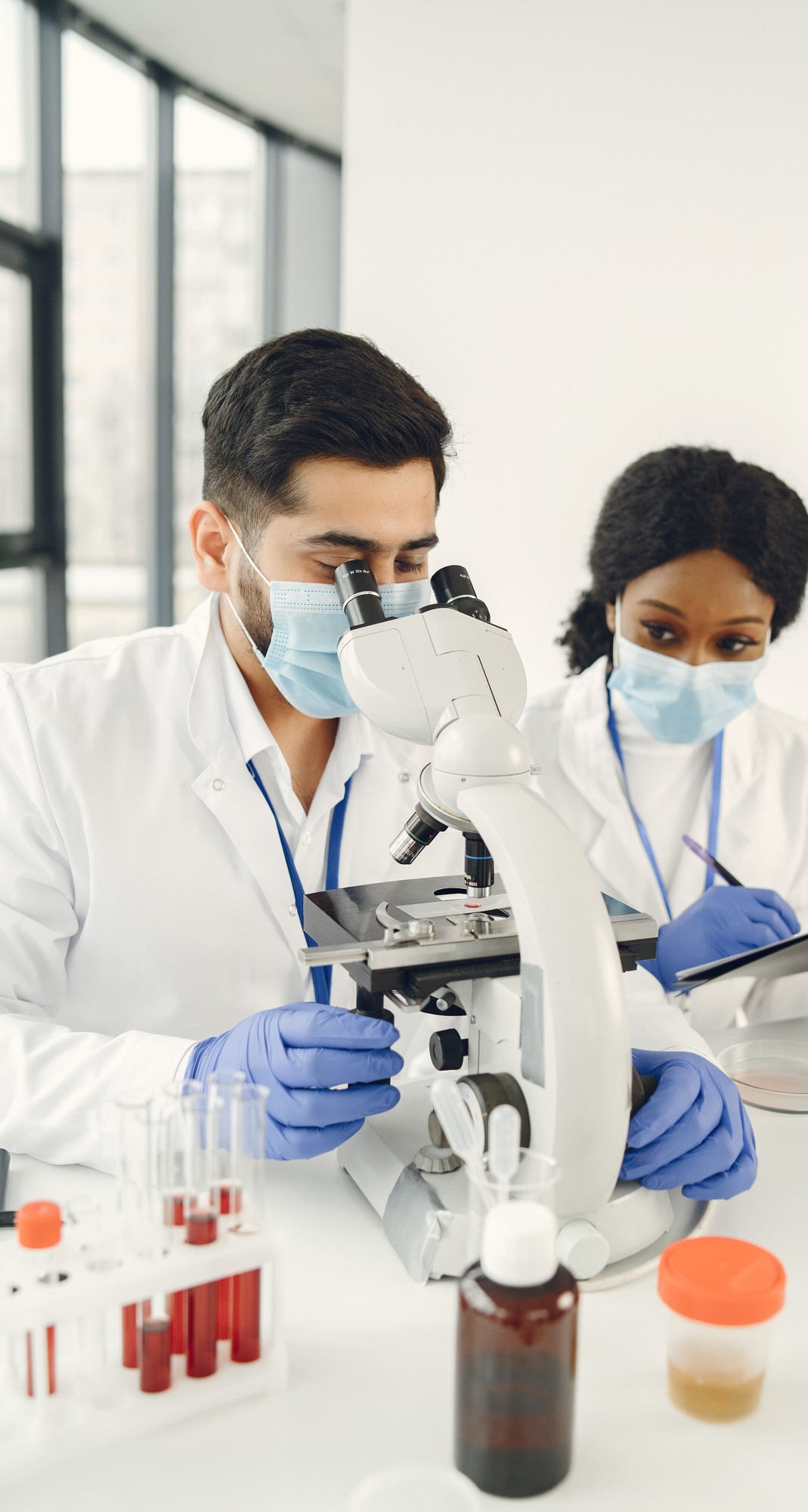
Course Curriculum
Module 1: Back to Basics - 20hrs
1. Can CBC Parameters predict P.Smear findings?
- CBC Basics-RBC,WBC and Platelets Parameters
- Cases-Anemia
- Cases-WBC Disorders and Spurious values
2. Lab Approach to Anemia
3. Approach to Cytopenia
4. Approach to Peripheral Smear
5. Cases-PS
Assessment
Module 2: Bone Marrow - 35hrs
- Bone Marrow-Approach
- Case Discussion 1
- Case Discussion 2
- Case Discussion 3
- Approach to Haemolytic Anemia
- Approach to Bleeding Disorders
- Cases-Bleeding Disorders
- Assessment
Module 3: Clinical Path - 45hrs
- Preanalytic Phase
- Case Discussion-Anemia (Hb estimation, ESR,PCV)
- Case Discussion-Anemia (Hb estimation, ESR,PCV)
- Case Discussion-Diabetic Nephropathy (Urine Analysis-Manual)
- Case Discussion-Renal Failure (Urine Analysis-Automated)
- Case Discussion-Jaundice (Interpration of LFT)
- Case Discussion-Leukemia
- Assessment
Gain Advantage From experts
Dr. Chethan Manohar is a qualified Pathologist and has experience of more than three decades.

Dr. Chethan Manohar
MBBS, MD (Pathology)
Dr. Chethan Manohar is a highly experienced Consultant Pathologist with over three decades of expertise in haematology, clinical pathology, and laboratory medicine. She holds a MBBS from MS Ramaiah Medical College, Bengaluru (1982–1987) and a Doctor of Medicine in Pathology from Kasturba Medical College, Mangalore (1989–1991). Throughout her career, she has combined deep clinical knowledge with a passion for teaching, guiding both undergraduate and postgraduate medical students at Kasturba Medical College Manipal as Professor of Pathology. Her dedication was formally recognised when she got the "Good Teacher" award in 2017 for undergraduate Pathology teaching.
She has held leadership roles in reputed institutions, including serving as Lab Director at Kasturba Hospital Laboratory Services in Manipal, where she was instrumental in steering multi-disciplinary laboratories—covering pathology, haematology, biochemistry, microbiology, and genetics—towards NABL accreditation. In her capacity as Head of Clinical Lab & Haematology at Kasturba Hospital, she led efforts to establish standardised quality systems and implement critical diagnostic protocols, enabling accurate and reliable reporting.
Earlier in her career, she served as Consultant Pathologist at Anand Diagnostic Laboratory, Bengaluru. Beyond her clinical responsibilities, Dr. Manohar has been deeply committed to advancing laboratory medicine in India through quality system development, education, and mentorship.
Currently based in Mysuru, Karnataka, Dr. Manohar continues to be recognised for her contributions to laboratory excellence, academic teaching, and her leadership in diagnostic services.
How The Course Benifits You

Flexibility & convenience of time and space

A gold-standard certification signifies excellence and reliability in Haematology reporting

Clarity of thought in approaching Haematology cases

Enjoyment and confidence to upskill yourself and get certification
Optimal pricing with maximum value; achieving the best costs for efficiency and effectiveness

Credibility & career advancement opportunities
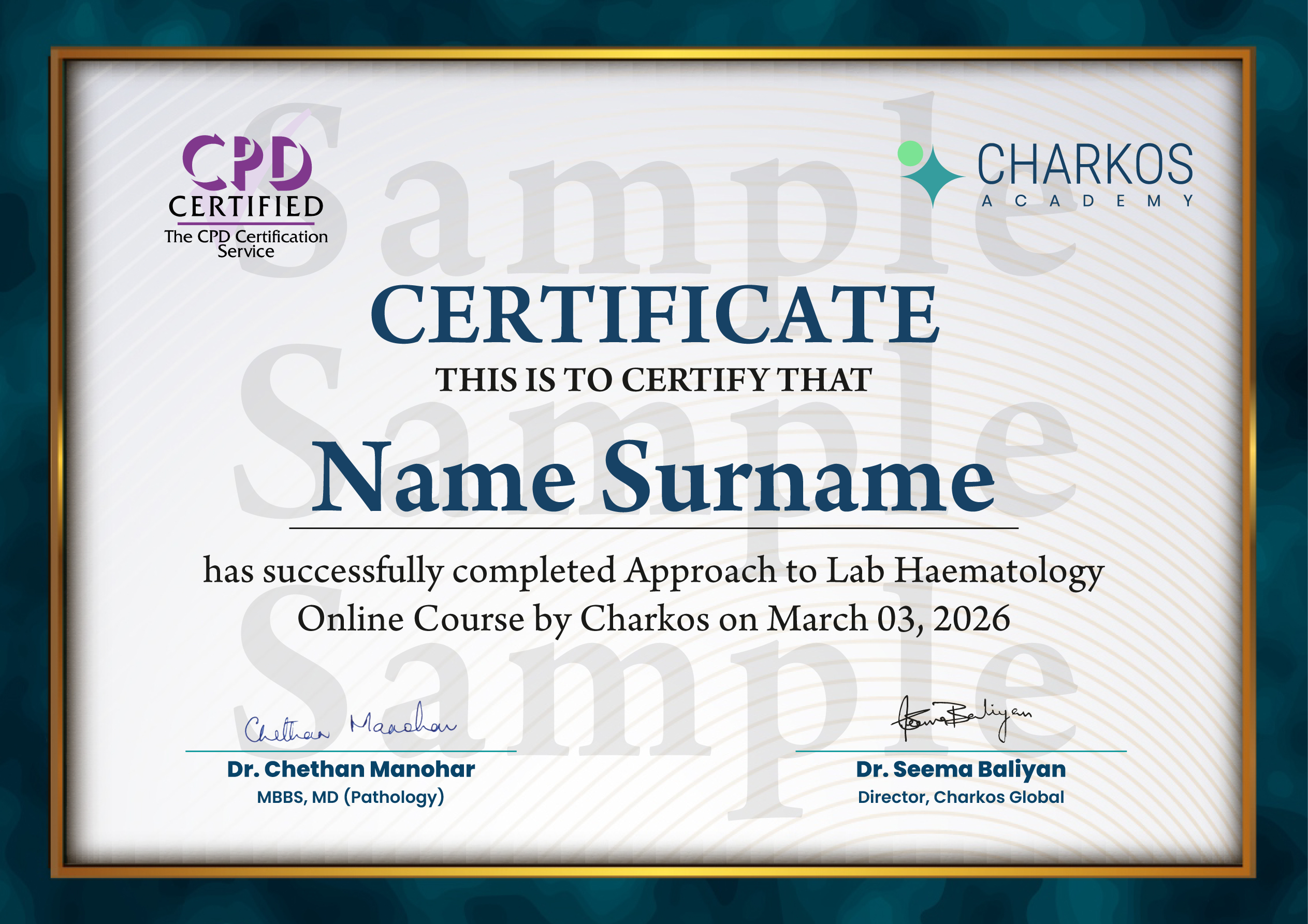
Get Certified By Charkos Academy!
Yes! You will get a course completion certificate by Charkos Academy once you complete the course and the assignment!
FAQ
Is this course suitable for beginners in Pathology?
Yes — it is designed for both students and young practitioners, with content focused on a strong foundation in Lab Haematology.
Do I need Pathology experience to enroll?
Yes, you need to be a PG Pathology student or a practising Pathologist.
How is the course delivered?
Blended format with self-paced online modules. (live virtual sessions, and case discussions.)
Will I receive a certificate?
Yes — participants receive a Certificate of Approach to Haematology upon successful completion.
How long is the course accessible for?
The course is available with access for 2 years from the date of course purchase. You are welcome to watch the videos as many times as you like to master the learning.
Can my organisation book group training?
Yes — group packages and tailored delivery options are available for healthcare teams.
How can I download my certificate after completing the course?
Once you have successfully completed all the course requirements, log in to your account and open your Student Dashboard. Select the completed course and click on the "Certificate" option. Then, click "Download Certificate" to save your certificate as a PDF.
I cannot see the "Download Certificate" button. What should I do?
Please ensure that:
• You have completed 100% of the course content.
• All mandatory assessments or quizzes have been successfully completed.
• Your course progress shows as fully completed.