Cytopathology Made Easy: From  Fundamentals  to  Advanced  Diagnostic  Practice

Build Diagnostic Confidence in Cytopathology

A comprehensive professional course covering cytopathology from fundamentals to advanced diagnostic practice, with expert-led live sessions, practical interpretation, standardized reporting, and case-based learning for pathology postgraduates and consultants.

A comprehensive 40-hour professional course for pathology postgraduates and consultants, covering cytopathology from fundamental principles to advanced diagnostic practice.

Develop practical skills in cytological diagnosis, standardized reporting, differential diagnosis, and interpretation of commonly encountered fine needle aspiration, fluid, gynecological, cervical PAP, brush, and other cytological specimens.
Course Structure
A structured two-part program covering 25 hours of Cytopathology Basics and 15 hours of Advanced Cytopathology, with practical diagnostic learning, standardized reporting systems, differential diagnosis, and case-based discussions.
Duration 40 Hours
Course Structure 20 Modules
Target Audience Pathology PGs & Consultants
Course Fee ₹15,000 +GST per learner
Cytopathology Basics Fine Needle Aspiration Cytology Standardized Reporting Advanced Cytopathology Respiratory Tract Cytology Molecular Cytology Case-Based Discussion
Upcoming Live Batch

Classes Begin
24 Sep 2026

Join live expert-led Respiratory Cytology sessions from 

anywhere in the world.

Session Timing
06:00 PM – 07:00 PM IST
Learning Format
Live + Recorded
Inside the Course

From
fundamentals.
To
advanced practice.

A structured 40-hour journey through commonly encountered cytological specimens, diagnostic approaches, standardized reporting systems, differential diagnosis, and advanced cytopathology.

Cytopathology Made Easy
Cytopathology Basics
Build a strong diagnostic foundation
Specimen Evaluation
Understand diverse cytological samples
Diagnostic Interpretation
Recognise commonly encountered cases
Standardized Reporting
Develop structured cytology reports
Advanced Cytopathology
Explore ROSE and molecular cytology
Case-Based Discussion
Apply learning to diagnostic cases
Learning Outcomes
What You Will Learn

Build practical diagnostic skills across fundamental and advanced cytopathology for confident interpretation and structured reporting.
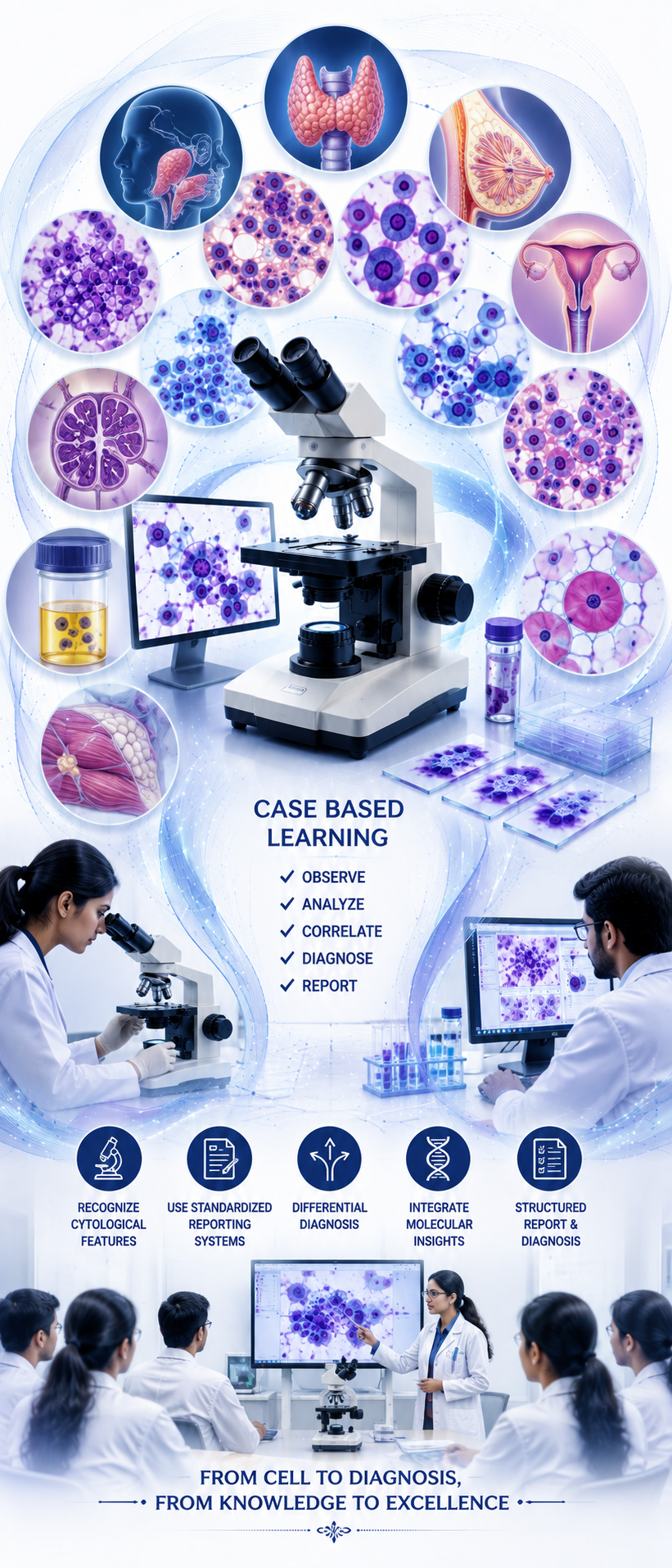
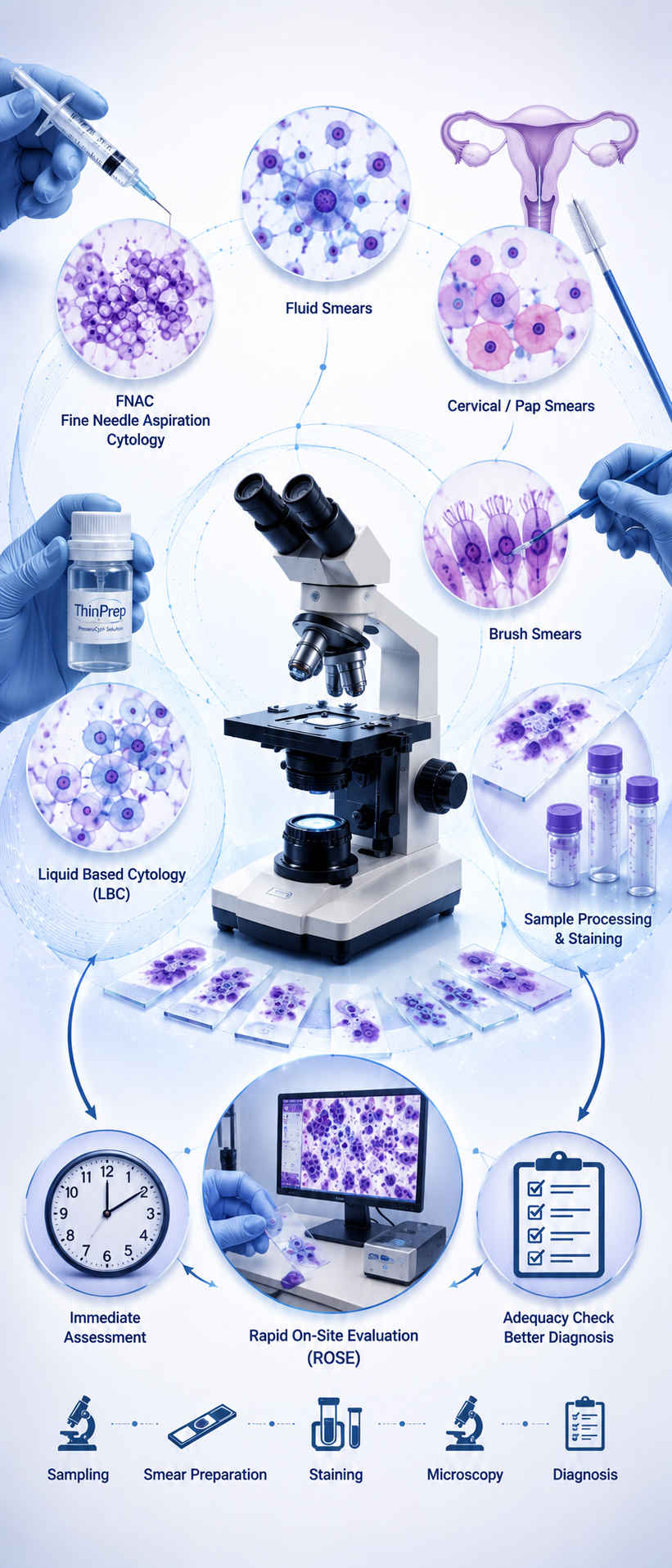
01
Cytopathology Fundamentals
Build a strong foundation in commonly encountered cytological cases, indications for cytological procedures, and fundamental diagnostic principles.
02
Specimen & Sample Evaluation
Develop familiarity with fine needle aspiration cytology, fluid smears, cervical PAP smears, brush smears, and other commonly encountered cytological specimens.
03
Diagnostic Interpretation
Interpret commonly encountered cytology slides and develop the ability to arrive at appropriate diagnoses across multiple cytological specimens.
04
Standardized Reporting
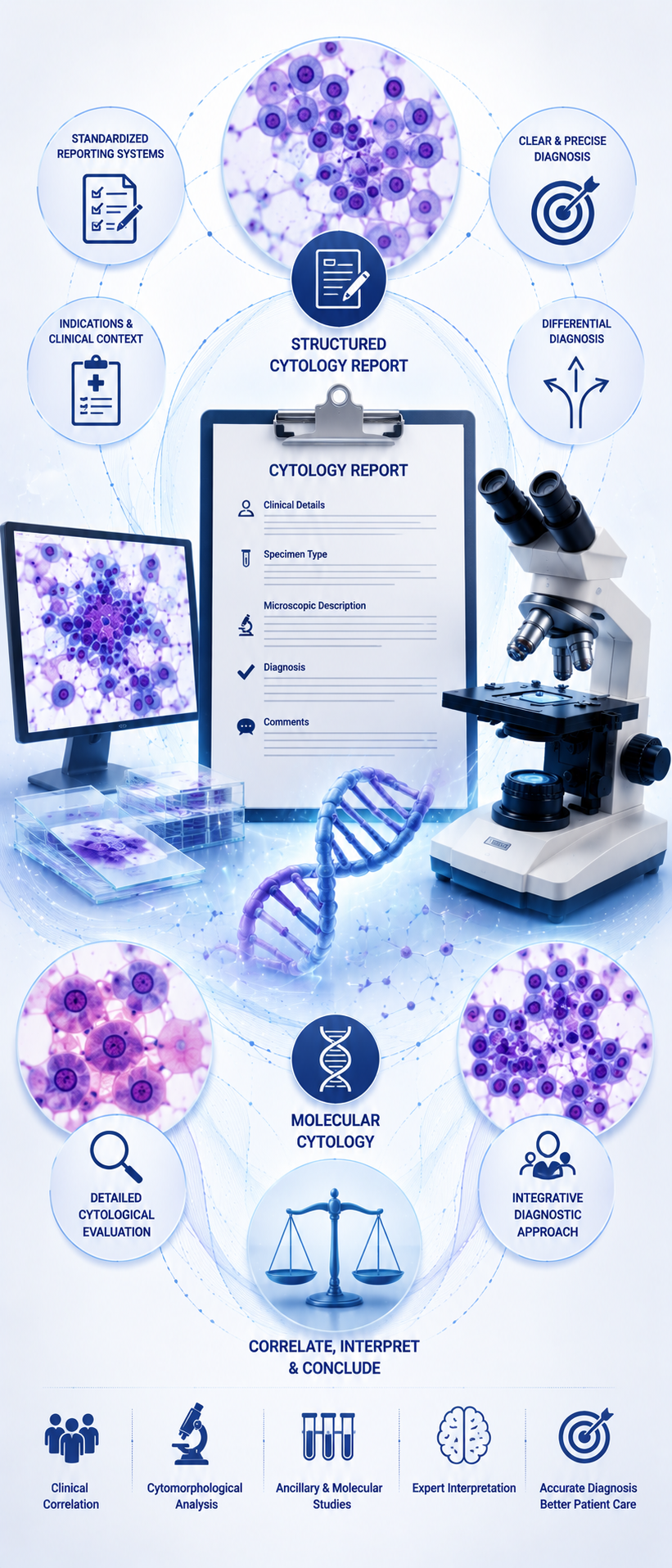
Understand updated standardized cytopathology reporting systems and learn to write structured cytology reports and diagnoses.
05
Advanced Cytopathology
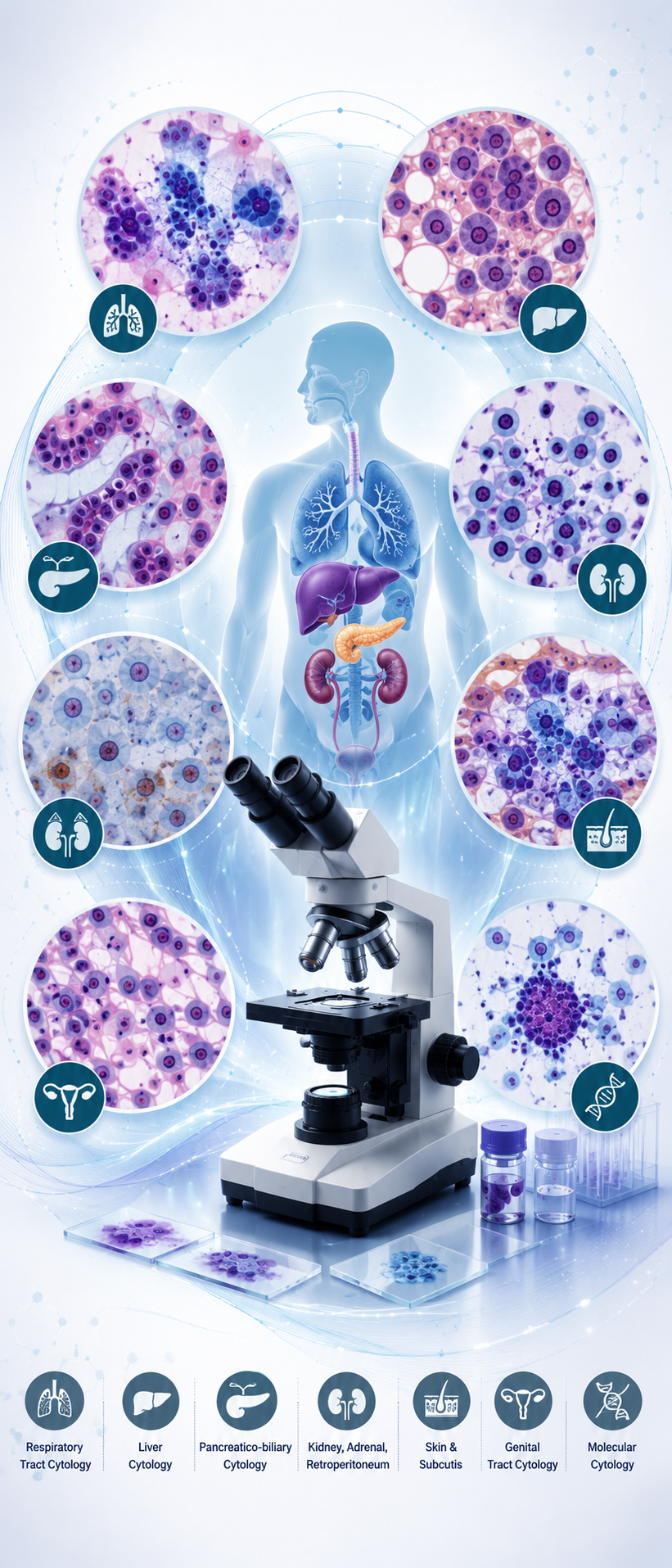
Explore advanced areas including respiratory tract, liver, pancreatico-biliary, kidney, adrenal, genital tract, molecular cytology, and ROSE.
06
Differential Diagnosis & Case Discussion
Strengthen diagnostic reasoning through differential diagnoses and case-based discussions focused on commonly encountered cytopathology cases.
Why Choose Charkos Academy?
01
Structured, Focused Curriculum
A logically sequenced curriculum built around respiratory cytology — from sample basics to advanced diagnostic reporting.
02
Practical Diagnostic Knowledge
Deep understanding of sample types, smear interpretation, and histopathological correlation — not just textbook theory.
03
Live & Recorded Sessions
Attend guided live evening lectures with full recorded access — learn at your own pace without missing anything.
04
Case-Based, Practice-Ready Learning
Case-based discussions drawn from real reporting workflows, so learning applies directly to daily practice.
05
Expert-Led Teaching
Learn from Dr Archana Bhat, Associate Professor of Pathology at Father Muller Medical College, Mangalore.
06
Recognised Certification
Earn an assessment-based certificate from Charkos Academy — shareable on LinkedIn and valued by healthcare institutions.
Course Curriculum

20 modules · Cytopathology Made Easy: From Fundamentals to Advanced Diagnostic Practice

Module 01 Introduction to Cytopathology & Basic Principles
Introduction to cytopathology and its role in diagnosis
Commonly encountered cytological specimens
Indications for cytological procedures
Basic principles of cytological diagnosis
Module 02 Fine Needle Aspiration Cytology
Principles and indications of FNA
FNA technique and specimen handling
Preparation and evaluation of cytological smears
Common diagnostic applications of FNA
Module 03 Salivary Gland Cytology
Approach to salivary gland cytology
Common benign and malignant lesions
Cytological features and diagnostic interpretation
Differential diagnosis and reporting approach
Module 04 Lymph Node Cytology
Approach to lymph node FNA
Reactive and inflammatory conditions
Metastatic malignancy
Lymphoid lesions and diagnostic differentials
Module 05 Thyroid Cytology
Thyroid FNA and specimen evaluation
Benign thyroid lesions
Thyroid malignancies and their cytological features
Standardized thyroid cytology reporting
Module 06 Breast Cytology
Approach to breast cytology
Benign breast lesions
Malignant breast lesions
Cytological differential diagnosis
Module 07 Gynecological Cytology
Principles of gynecological cytology
Cervical PAP smears
Benign, inflammatory and reactive changes
Pre-malignant and malignant cervical lesions
Module 08 Body Fluid Cytology
Evaluation of serous and other body fluids
Reactive and inflammatory changes
Malignant cells in fluid specimens
Interpretation and reporting of fluid cytology
Module 09 Urine Cytology
Urinary tract cytology specimens
Benign and reactive urothelial changes
Urothelial malignancy
Diagnostic interpretation and reporting
Module 10 Soft Tissue & Other Cytology
Soft tissue and subcutaneous lesions
Common cytological patterns
Benign versus malignant lesions
Approach to cytological differential diagnosis
Module 11 Respiratory Tract Cytology
Respiratory cytology specimens and indications
Bronchoalveolar lavage and bronchial brush cytology
FNA and EBUS-FNA
Infective, inflammatory and neoplastic lesions
Module 12 Liver & Pancreatico-Biliary Cytology
Cytological evaluation of liver lesions
Hepatocellular and metastatic lesions
Pancreatico-biliary cytology
Diagnostic approach and differential diagnosis
Module 13 Rapid On-Site Evaluation (ROSE)
Principles and workflow of ROSE
Role of ROSE in FNA and EBUS-FNA
Adequacy assessment
Improving diagnostic yield through ROSE
Module 14 Kidney, Adrenal & Retroperitoneal Cytology
Cytological approach to renal lesions
Adrenal lesions and diagnostic considerations
Retroperitoneal lesions
Differential diagnosis and interpretation
Module 15 Skin & Subcutaneous Cytology
Cytological evaluation of skin lesions
Subcutaneous lesions
Benign, inflammatory and malignant conditions
Diagnostic interpretation
Module 16 Genital Tract Cytology
Female genital tract cytology
Common benign and inflammatory changes
Pre-malignant and malignant lesions
Diagnostic and reporting considerations
Module 17 Molecular Cytology
Role of molecular techniques in cytopathology
Applications in diagnostic cytology
Integration of molecular findings with cytomorphology
Clinical relevance of molecular cytology
Module 18 Advanced Diagnostic Approach & Reporting
Structured cytology reporting
Application of standardized reporting systems
Diagnostic pitfalls and common interpretive challenges
Correlation of cytology with clinical and histopathological findings
Module 19 Differential Diagnosis & Case-Based Discussion
Approach to cytological differential diagnosis
Common diagnostic dilemmas
Integrated case-based discussions
Applying cytomorphology to diagnostic decision-making
Module 20 Case Discussion, Summary & Key Takeaways
Integrated case discussions across cytopathology systems
Review of major diagnostic principles
Practical approach to cytology reporting
Course summary and key takeaways
Who Is This Course For?
Pathology Postgraduates
MD Pathology Residents
DNB Pathology Residents
Pathology Consultants
Consultant Pathologists Strengthening Cytopathology Practice
Pathologists Developing Diagnostic Cytology Skills
Pathology Professionals Seeking Structured Cytopathology Learning
Pathology Professionals Advancing Their Cytopathology Knowledge
How This Course Benefits You
01
Build Strong Cytopathology Foundations
Develop a structured understanding of cytopathology fundamentals, specimens, indications, and core diagnostic principles.
02
Strengthen Diagnostic Interpretation
Improve your ability to interpret commonly encountered cytological specimens and arrive at appropriate diagnoses.
03
Develop Structured Reporting Skills
Learn updated standardized reporting systems and strengthen your ability to write structured cytology reports and diagnoses.
04
Expand Into Advanced Cytopathology
Explore advanced areas including respiratory tract, liver, pancreatico-biliary, kidney, adrenal, genital tract, molecular cytology, and ROSE.
05
Strengthen Diagnostic Confidence
Develop stronger diagnostic reasoning through differential diagnosis, case-based discussion, and practical application of cytomorphological findings.
06
Advance Your Cytopathology Practice
Build comprehensive cytopathology knowledge across a structured 40-hour program designed for pathology postgraduates and consultants.
Course Mentor
Dr. Archana Bhat
10+
Years in Cytopathology
43+
Publications
4
Textbooks Authored
5
National & State Awards
Associate Professor · Father Muller Medical College, Mangalore
Dr. Archana Bhat
MD (Pathology), PDCC (Nephropathology), ACME
Department of Pathology · Father Muller Medical College, Mangalore
An experienced cytopathologist with over 10 years in diagnostic cytopathology and 43+ peer-reviewed publications across national and international journals. Technical Manager of the Cytopathology Division and Chief Consultant Nephropathologist at FMMCH, with expertise spanning cytopathology, nephropathology, pulmonary pathology, and medical education.
Best Researcher Award 2024 & FMCI Academic Excellence Award
Social Media Editor, BMJ Journal of Clinical Pathology (Q1) & Secretary, Indian Association of Cytology — Karnataka Chapter
Authored 4 textbooks, including "Essentials of Renal Pathology" and "Gamification and Digital Tools in Medical Education"

Why This Course?

This comprehensive, practical course takes you from the fundamentals of cytopathology to advanced diagnostic practice, helping participants to:

This course will help you:

  • Describe the cytological features of commonly encountered cytological cases
  • Understand the indications for various cytological procedures and the evaluation of different cytological specimens
  • Interpret fine needle aspiration, fluid, cervical PAP, brush, and other commonly encountered cytological specimens
  • Apply updated standardized reporting systems and write structured cytology reports and diagnoses
  • Develop differential diagnoses and strengthen diagnostic reasoning through case-based discussions
  • Explore advanced cytopathology including respiratory tract, liver, pancreatico-biliary, kidney, adrenal, genital tract, molecular cytology, and ROSE
Get Certified byCharkos Academy

Complete the course and its assignments to earn a recognised certification from Charkos Academy — a credential that reflects your expertise in Cytopathology.
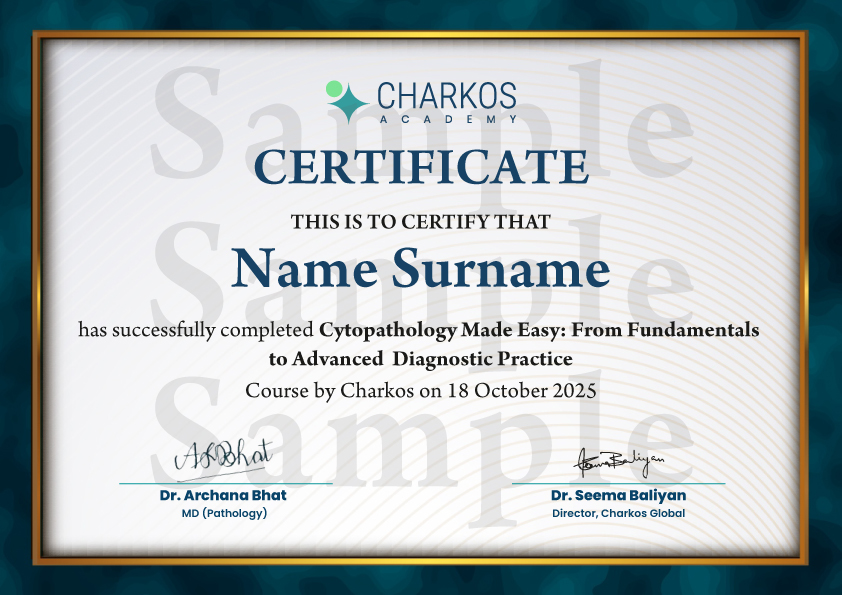
Issued upon successful course & assignment completion
Charkos Academy Certificate Sample
Verified

FAQ

Is this course suitable for beginners?

Yes. The course is structured in two parts — Basics and Advanced — starting with foundational cytopathology concepts and progressing to advanced diagnostic applications, making it suitable for postgraduates and early-career pathologists.

Who can enroll in this course?

Pathology postgraduates (MD/DNB), practicing pathology consultants, and cytopathology fellows looking to strengthen their diagnostic reporting skills can benefit from this program.

Is the course theoretical or practical?

The course combines cytomorphological concepts, slide interpretation, case-based discussions, and standardized reporting systems to ensure practical, reporting-ready skills.

What learning format is used?

The course follows a online learning model, combining live expert-led sessions with recorded content for flexible access and continuous learning.


Will live classes be recorded?

Yes. All live sessions will be recorded and made available for enrolled participants, allowing flexible learning and revision.

Will I receive a certificate?

Yes. Participants who successfully complete the course requirements will receive a Course Completion Certificate.

Is this course relevant for laboratory professionals?

Absolutely. The course includes FNAC processing, PAP smear and fluid cytology reporting, standardized reporting systems, and quality-focused diagnostic workflows that are directly applicable to cytopathology laboratory practice.

Can this course help advance my career?

Yes. The course enhances expertise in cytopathology, diagnostic reporting, and standardized cytology systems, supporting career growth in hospitals, diagnostic laboratories, and pathology departments.

Will international learners benefit from this course?

Yes. The curriculum covers standardized, internationally recognized cytopathology reporting systems, making it relevant for pathologists practicing across different healthcare systems.

Do I need prior experience in Cytopathology?

A basic background in pathology is helpful, but no prior cytopathology expertise is required. The course is structured in two parts — Basics and Advanced — so learners progress systematically from foundational concepts to advanced diagnostic applications.

What topics are covered in the course?

The curriculum covers salivary gland, lymph node, thyroid, breast, gynaecologic/PAP, effusion, urine, and soft tissue cytology in the Basics module, followed by respiratory tract cytology, liver and pancreatico-biliary cytology, rapid on-site evaluation (ROSE), kidney/adrenal/retroperitoneum, skin, genital tract, and molecular cytology in the Advanced module — with case-based discussions throughout.

How long is the course?

The program runs for 40 hours across 20 modules (25 hours Basics + 15 hours Advanced), held on alternate Saturdays with structured live and recorded learning sessions.