
Clinical Examination in Surgery – Certificate Course
A Premium Certificate Course by Charkos Academy
An 8-Module Practical Examination Course for MBBS Students, Interns, GPs & Early-Career Clinicians
Simple • Practical • Case-Based • OSCE-Focused
A short, high-impact programme designed to help early-career clinicians master real-world clinical examination skills in surgery — using structured frameworks, examination demonstrations, case-based reasoning, and two live interactive OSCE sessions.
⭐ Master Clinical Examination Without Memorising Surgery Textbooks
Most students know theory, but very few learn how to actually examine a patient, elicit signs confidently, and interpret findings in a clinically meaningful way.
This 8-module certification course teaches you exactly what to do, how to do it, and what your findings mean — focusing on bedside skills, OSCE logic, and clear diagnostic thinking.
INR ? (inclusive of GST)
EMI options available through the payment Gateway.
8 weeks-? (self-paced with live sessions)
A Course Designed by Experts in Endocrinology
Why Choose Charkos Academy?
-
At Charkos Academy, we offer structured, industry-aligned medical training focusing on clinical clarity, practical skills, and confident decision-making. Every learner benefits from:
- Expert-designed curriculum based on authentic surgical examination practice
- Live demonstration sessions conducted by senior surgical faculty
- Clear learning outcomes with assessments after each module
- Final OSCE-based evaluation for certification
- Practical templates, checklists & ready-to-use examination guides
- 100% online delivery + recordings for flexible learning
What You Will Learn
By the end of this programme, you will confidently:
- Take a complete surgical history using a structured framework
- Conduct a methodical general physical examination
- Examine ulcers using the 7-parameter surgical inspection method
- Perform a thorough abdominal examination with special signs
- Examine hernias & groin swellings with clinical precision
- Perform vascular & limb examination including special tests
- Apply the ABCDE trauma survey in emergencies
- Document findings in clear, professional formats
- Build strong clinical reasoning & differential diagnoses
- Approach OSCEs with confidence and structure
Who is this course for?
MBBS Students (all clinical years)
MBBS Interns preparing for ward postings
General Practitioners & Family Physicians
BSc Nursing, GNM & Allied Health Students
NEET-PG / FMGE Aspirants
Early-career surgical trainees
Key Highlights
- 8 structured modules with step-by-step clinical demonstration
- OSCE-focused training with real case examples
- Emphasis on clinical reasoning, not just memorisation
- Designed specifically for junior clinicians
- Includes cheat sheets, templates & ready-to-use checklists
- Final practical + theory assessment
- Certificate of Completion from Charkos Academy
- 100% online + recordings available
Why This Course Matters
Most students learn “what the sign means,” but not:
- How to elicit it
- What sequence to follow
- When to use special tests
- How to interpret findings
- How to document correctly
- How to think during OSCEs
This course closes that gap by focusing on practical bedside examination, pattern recognition, and step-wise clinical judgment.
FINAL CERTIFICATION REQUIREMENTS
To receive the Certificate in Thyroid Tests Demystified, learners must:
- Complete all module assessments
- Score ≥ 60% in the Final MCQ + Case Exam
Why Students Love This Course
✔ Case-based teaching (not textbook theory)
✔ Real clinical workflow demonstrations
✔ Practical skills not taught well in most colleges
✔ Useful for postings, OSCEs & professional exams
✔ Improves clinical confidence and patient outcomesCareer Benefits
Completing this course empowers you to:
- Examine patients systematically and confidently
- Improve diagnostic accuracy in OPD, wards & emergency settings
- Reduce unnecessary investigations through better clinical judgment
- Prepare effectively for vivas, OSCEs & NEET-PG
- Build strong clinical credibility as a doctor
Practical Tools You Will Receive
- 📘 General Examination Checklist
📘 Abdominal Examination Pocket Guide
📘 Ulcer Examination Template (7-Parameter Method)
📘 Hernia Assessment Framework
📘 Vascular Examination Card
📘 ABCDE Trauma Algorithm
📘 OSCE Practice Template
📘 SOAP Documentation Format
Course Curriculum
COURSE STRUCTURE
(Modules & Learning Outcomes)
Module 1 — History Taking & Patient Approach
“Understanding the Surgical Patient”
Topics Covered:
- Demographics, presenting complaints
- Chronology & progression of symptoms
- Past, personal, treatment & family history
- Consent, privacy, chaperone rules
Output: ✓ Surgical History Template
Module 2 — General Physical Examination
“From the Doorway to the Bedside”
Topics Covered:
- Pallor, icterus, cyanosis, clubbing, edema
- BMI, vitals, hydration & nutrition assessment
- Lymph node examination basics
Output: ✓ General Examination Checklist
Module 3 — Ulcer Examination (Complete Framework)
“The 7-Step Ulcer Evaluation”
Topics Covered:
- Site, size, shape, edge, margin, floor, discharge
- Differentiating benign, infective & malignant ulcers
- Describing findings like a surgeon
Output: ✓ Ulcer Examination Proforma
Module 4 — Abdominal Examination Masterclass
“Inspection → Palpation → Percussion → Auscultation”
Topics Covered:
- Guarding, rigidity, organomegaly
- Special tests: Murphy’s, McBurney’s, Rovsing’s
- Palpation of liver, spleen, kidney, aorta
- Ascites evaluation
Output: ✓ Abdominal Examination Quick Guide
Module 5 — Hernia & Groin Examination
“Diagnose Swellings with Confidence”
Topics Covered:
- Reducibility, cough impulse
- Get-above-the-swelling test
- Direct vs indirect inguinal hernia
- Femoral vs inguinal differentiation
Output: ✓ Hernia Evaluation Flowchart
Module 6 — Limb & Vascular Examination
“Pulses, Perfusion & Vascular Integrity”
Topics Covered:
- Pulse examination (DP, PT, femoral, popliteal)
- Capillary refill, Buerger’s angle
- Allen’s test, Trendelenburg test
- Varicose veins assessment
Output: ✓ Vascular Examination Card
Module 7 — Trauma Examination (ABCDE Approach)
“Rapid Assessment That Saves Lives”
Topics Covered:
- Airway, Breathing, Circulation
- Disability (GCS) & Exposure
- Primary & Secondary Survey
- Trauma red flags
Output: ✓ ABCDE Trauma Algorithm
Module 8 — OSCE Preparation & Case-Based Integration
“Perform Like a Confident Clinician”
Topics Covered:
- OSCE patterns for abdomen, ulcer, hernia & general exam
- Case presentations & differential diagnosis
- How to document findings professionally
- Final OSCE simulation with instructor guidance
Output: ✓ OSCE Practice Kit
Total Program:
• Duration: 8 weeks (self-paced or 1 lesson/week)
• Videos: ~
Gain Advantage From experts
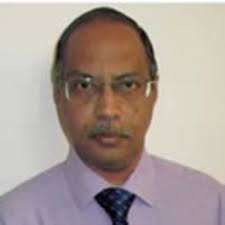
Course Mentor:
MBBS, MS (General Surgery)
Former Professor & Head, Department of Surgery, KMC Manipal
38+ Years of Teaching & Surgical Experience
National Board Examiner • Published Author • CME Orator
Prof. Dr. P. Sampath Kumar is a distinguished surgical educator with over 38 years of academic and clinical experience.
A gold medallist from Kurnool Medical College, he completed his MS (General Surgery) at JIPMER, Pondicherry, one of India’s leading institutions.
He served more than three decades at Kasturba Medical College (KMC), Manipal, where he rose to become:
- Professor of Surgery
- Head of Department
- Associate Dean
- Postgraduate Teacher & University Examiner
Renowned for his structured, patient-centred approach, he has trained thousands of MBBS and MS students, many now leading surgical departments across India.
After retiring from KMC, he continued teaching at Melaka Manipal Medical College and Manipal Tata Medical College (MTMC), Jamshedpur, guiding new batches through their clinical training.
His key areas of expertise include:
- Acute abdomen
- Emergency surgical decision-making
- Postoperative complication management
- Necrotising fasciitis
- Blunt abdominal trauma
He has delivered multiple prestigious orations, organised national-level CMEs, and published extensively in peer-reviewed journals.
His lifelong passion: Teaching Surgery with clarity, compassion and clinical excellence.
How The Course Benifits You
🧠
Master Clinical Examination
Like a Specialist
Step-by-step practical frameworks that make examination easy.
🎯
Avoid Misdiagnosis & Improve Accuracy
Learn what signs actually mean and how to interpret them.
⚡
Make Faster, Evidence-Based Clinical Decisions
Apply structured reasoning used by experienced surgeons.
🧩
Manage a Wider Range of Cases Independently
Become confident in OPD, wards and emergencies.
🌟
Enhance Your Reputation as a Knowledgeable Clinician
Better clinical judgment builds trust and credibility.
⏰
Flexible Learning Designed for Busy Students and Doctors
Short modules + recordings + mobile access.
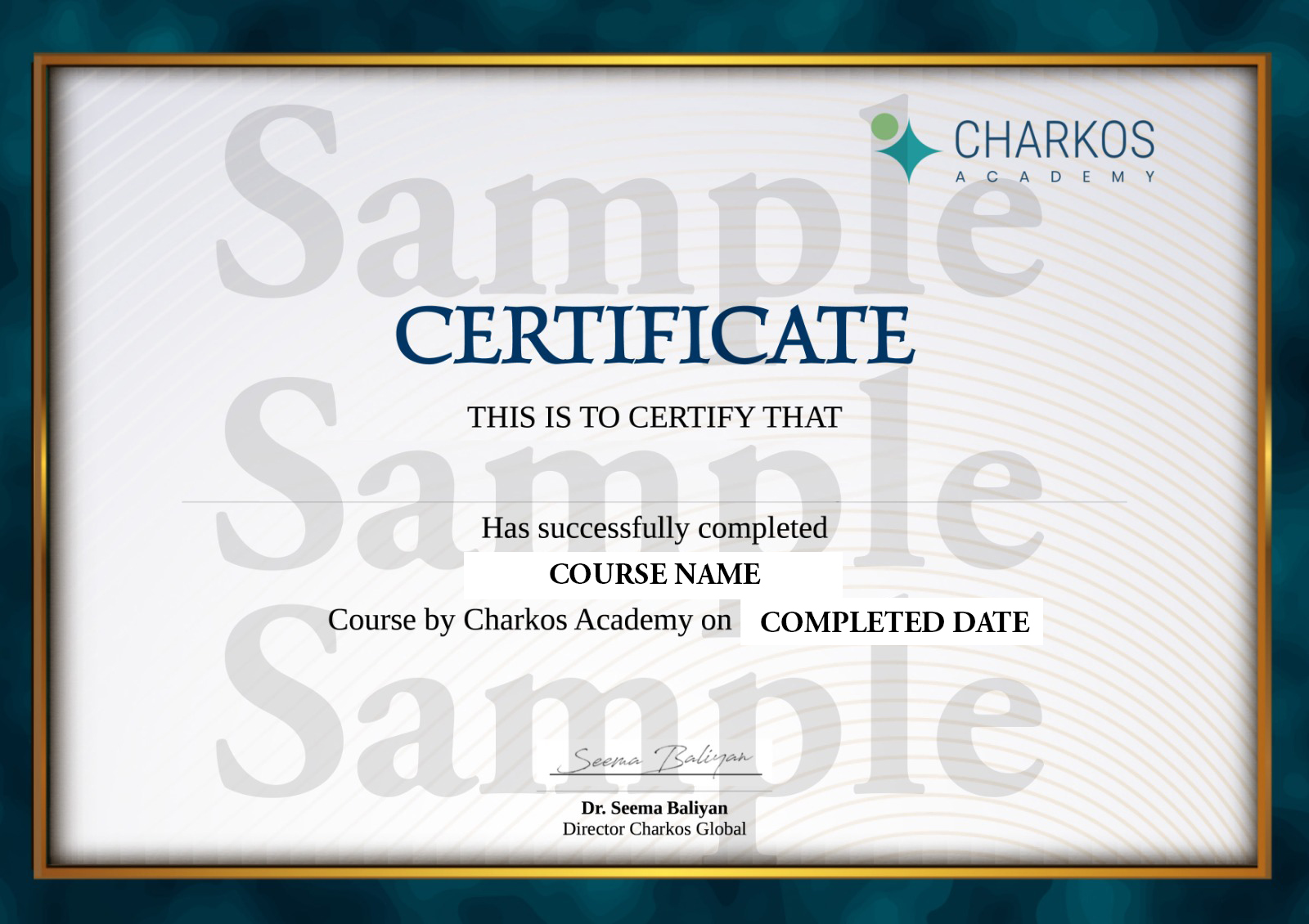
Get Certified By Charkos Academy!
Yes! You will get a course completion certificate by Charkos Academy once you complete the course and the assignment!
FAQ
Will this course help me in day-to-day clinical practice?
Absolutely. It focuses on real-world patterns, examination flow, and OSCE-ready skills that you can apply immediately.
Is there a certificate provided at the end of the course?
Yes, after completing all modules and the final exam.
How are the classes delivered and what is the schedule like?
Modules are delivered through live online sessions (recorded as well) so you can learn at your own pace. Each module lasts 45–60 minutes, making it ideal for busy clinicians.
What makes this course different from other surgical training programmes?
Most surgical courses emphasise operative techniques or theoretical knowledge, while bedside clinical examination is often not taught in a structured, practical way.
This programme fills that gap by focusing exclusively on examination skills — teaching you how to systematically examine a patient, interpret physical findings, and build clinical reasoning using proven surgical frameworks.
It gives you practical, OSCE-ready competence that routine ward postings alone rarely provide.
Do I need prior surgical training?
No. The course starts with basics and builds up logically.
Who is this course designed for?
MBBS students, interns, GPs, nursing students, and early-career clinicians.