
Practical Interpretation of Endocrine Tests for Clinicians
(6-Month Training Programme)
A Premium Certificate Course by Charkos Academy
Master endocrine test interpretation. Diagnose with confidence. Treat with precision.
Endocrine disorders are among the most misdiagnosed conditions in clinical practice — not because doctors lack clinical skill, but because endocrine lab tests are complex, counter-intuitive, and often misleading.
This flagship Charkos Academy programme teaches you how to interpret endocrine tests the way endocrinologists do— using patterns, physiology, dynamic testing, and real-world case correlations.
Suitable for MBBS doctors, MD physicians, GPs, family physicians, diabetologists, and early-career endocrine trainees.
INR 10,000 (inclusive of GST)
EMI options available through the payment Gateway.
6 months (self-paced with live sessions)
A Course Designed by Experts in Endocrinology
Why Choose Charkos Academy?
-
At Charkos Academy, our mission is to deliver high-quality, accessible healthcare education through structured, industry-backed training. We ensure every learner gains:
- Industry-aligned curriculum designed by Endocrinology experts
- Live demonstration sessions conducted by clinical trainers
- Clear learning outcomes with assessments after every module
- Final practical and theoretical assessment for certification
- Hybrid learning: online coursework
At Charkos Academy, our mission is to deliver high-quality, accessible healthcare education through structured, industry-backed training. We ensure every learner gains:
- Industry-aligned curriculum designed by Endocrinology experts
- Live demonstration sessions conducted by clinical trainers
- Clear learning outcomes with assessments after every module
- Final practical and theoretical assessment for certification
- Hybrid learning: online coursework
What You Will Learn
By the end of this programme, you will be able to:
✔ Correctly interpret TFTs, cortisol tests, pituitary panels, ACTH, calcium/PTH, sex hormones & metabolic markers
✔ Use dynamic tests (DST, Synacthen, OGTT for GH) appropriately
✔ Decode confusing patterns like low TSH + normal FT4 or high prolactin with normal MRI
✔ Identify lab interferences (macroprolactin, biotin, hook effect)
✔ Interpret CGM, AGP & advanced diabetes markers
✔ Diagnose complex disorders (SIADH, DI, hyperpara, Cushing’s, acromegaly)
✔ Apply simple, practical clinical algorithms for endocrine decision-making
Who is this course for?
MBBS Doctors
MD Medicine / Internal Medicine Physicians
GPs & Family Physicians
Diabetologists
Paediatricians managing endocrine issues
Early-career endocrinology fellows
Key Highlights
- 10 structured modules covering all major endocrine systems
- 45–60 minute sessions designed for busy clinicians
- Live case discussions + OSCE-style interpretation practice
- Learn endocrine patterns, dynamic testing, and real-world reporting
- Understand assay pitfalls, false results & lab errors
- Final certification exam validating your competence
- Applicable to primary care, internal medicine, diabetology, endocrinology
Why This Course Matters
Most doctors learn what to order, but not how to interpret complex endocrine reports — especially when results conflict with symptoms.
This course closes that gap by focusing on clinical interpretation, pattern recognition, lab pitfalls, and practical algorithms you can use immediately in your clinic.
FINAL CERTIFICATION REQUIREMENTS
To receive the Certificate in Practical Interpretation of Endocrine Tests for Clinicians, learners must:
- Complete all module assessments
- Score ≥ 60% in the Final MCQ + Case Exam
- Participate in at least 3 live case sessions
- Submit one reflective clinical case application (optional but recommended)
Why Doctors Love This Course
✔ Case-based teaching (not textbook theory)
✔ Clinically actionable interpretation frameworks
✔ Short modules tailored to busy schedules
✔ High-value content not taught in most postgraduate programmes
✔ Prevents misdiagnosis and improves patient outcomes
Career Benefits
Completing this course empowers you to:
- Manage endocrine cases with confidence
- Prevent unnecessary referrals
- Improve diagnostic accuracy in thyroid, adrenal, pituitary, metabolic disorders
- Make evidence-based treatment decisions
- Enhance your clinic’s reputation with specialist skills
- Bridge the gap between general practice & endocrinology
Practical Tools You Will Receive
- Endocrine test interpretation algorithms
- Dynamic test preparation sheets
- SIADH / DI / hypercalcemia cheat sheets
- CGM/AGP interpretation guide
- Pituitary & adrenal pattern recognition flowcharts
- Case library for future reference
Course Curriculum
COURSE STRUCTURE
(Modules & Learning Outcomes)
MODULE 1 — Thyroid Function Tests (TFTs) Demystified
Topics:
- Understanding TSH, FT4, FT3 patterns
- Subclinical vs overt hypo/hyperthyroidism
- Pregnancy-specific reference ranges
- ICU/Critical illness effects: NTI (non-thyroidal illness)
- Drug effects: amiodarone, steroids, lithium, heparin, OCPs
- Thyroid nodules & ultrasound interpretation basics
- When to do FNAC; TIRADS understanding
- Cases: discordant TFTs, low TSH + normal T4, high FT4 + normal TSH
Learning Outcomes:
- Correctly interpret TFTs across clinical settings
- Recognise drug and illness effects
- Identify when imaging or FNAC is indicated
Assessment:
- 30 MCQs + 3 case-interpretation mini-scenarios
MODULE 2 — Pituitary Hormone Panels & Dynamic Testing
Topics:
- Prolactin: true elevation vs macroprolactin; hook effect
- ACTH–cortisol axis: morning cortisol, ACTH, Synacthen test
- GH/IGF-1 axis and acromegaly OGTT
- Gonadotropins: FSH/LH interpretation
- Pituitary incidentalomas
- Pituitary emergencies (apoplexy patterns on labs)
Learning Outcomes:
- Understand pituitary axis physiology and patterns
- Identify when dynamic testing is needed
- Detect lab artifacts and false results
Assessment:
- 30 MCQs + 1 dynamic-test interpretation OSCE-style question
MODULE 3 — Adrenal Function Testing for Clinicians
Topics:
- Cortisol patterns: normal, insufficient, excess
- DST (Dexamethasone Suppression Test)
- Late-night salivary cortisol
- ARR (Aldosterone-Renin Ratio) — how to interpret correctly
- Adrenal incidentaloma hormonal work-up
- Case discussions: Cushing’s, Addison’s, PA, pheochromocytoma basics
Learning Outcomes:
- Differentiate adrenal insufficiency vs Cushing patterns
- Correctly interpret ARR
- Know when to order which test and how to prepare the patient
Assessment:
- Short-answer adrenal test interpretation + 30 MCQs
MODULE 4 — Gonadal & Reproductive Hormone Interpretation
Topics:
- Male: testosterone, SHBG, LH/FSH, prolactin
- Female: estradiol, progesterone, FSH/LH, AMH
- PCOS hormonal work-up (and common misinterpretations)
- Hypogonadism evaluation
- Menopause & premature ovarian failure diagnostic labs
Learning Outcomes:
- Interpret male & female hormonal panels confidently
- Use hormonal patterns to diagnose PCOS, POI, hypogonadism
Assessment:
- 2 clinical vignettes + MCQs
MODULE 5 — Calcium, PTH & Vitamin D Interpretation (incl. CKD-MBD)
Topics:
- PTH physiology; primary vs secondary hyperparathyroidism
- When calcium & PTH “don’t match”
- Hyper/hypocalcemia work-up
- CKD-MBD labs and interpretation (Ca-PTH-Vit D-phosphorus-FGF23 basics)
- Vitamin D pitfalls: normal levels with deficiency symptoms, lab inaccuracies
Learning Outcomes:
- Diagnose disorders of calcium metabolism
- Differentiate endocrine vs renal causes
- Apply algorithms to avoid misdiagnosis in hypercalcemia/hypocalcemia
Assessment:
- 1 flowchart-based activity + MCQs
MODULE 6 — Sodium & Water Balance Disorders (Endocrine Perspective)
Topics:
- SIADH interpretation (stepwise approach)
- DI (central vs nephrogenic) – water deprivation test interpretation
- Cerebral salt wasting
- Hypernatremia endocrine causes
- ICU scenarios: hyponatremia with confusing labs
Learning Outcomes:
- Diagnose complex sodium disorders with confidence
- Differentiate SIADH vs adrenal insufficiency vs DI
- Understand when to order osmolality, urine sodium, copeptin
Assessment:
- Case-based “fix this hyponatremia” interactive quiz
MODULE 7 — Diabetes & CGM/AGP Interpretation for Clinicians
Topics:
- HbA1c interpretation in special conditions
- AGP (Ambulatory Glucose Profile)
- Time-in-range (TIR), GV, hypoglycemia risk markers
- Insulin resistance markers (HOMA-IR, fasting insulin)
- Hypoglycemia evaluation in non-diabetics
Learning Outcomes:
- Confidently interpret CGM patterns
- Improve decision-making on insulin and oral agents based on data
Assessment:
- AGP interpretation OSCE + MCQs
MODULE 8 — Obesity & Metabolic Endocrinology Labs
Topics:
- Work-up for obesity: endocrine vs non-endocrine
- Lipid interpretation
- Thyroid, Cushing, PCOS red flags
- Metabolic syndrome markers
Learning Outcomes:
- Order correct tests and avoid unnecessary testing
- Identify secondary endocrine causes of obesity
Assessment:
- MCQs + 1 case vignette
MODULE 9 — Lab Pitfalls & Endocrine Assay Errors
Topics:
- Biotin interference
- Heterophile antibodies
- Macro-hormones (macroprolactin, macro-TSH)
- Timing errors
- Drug interferences
- When to suspect a lab error vs real disease
Learning Outcomes:
- Detect misleading labs and avoid misdiagnosis
- Know when to request dilution, chromatography, PEG precipitation
Assessment:
- Short written “spot the error” quiz
MODULE 10 — Integrated Case Masterclass (Grand Rounds)
Topics:
- 8–10 multi-hormonal complex endocrine cases
- Discordant or confusing lab patterns
- Combined thyroid-adrenal, pituitary-gonadal cases
- Real-world diagnostic algorithms
Learning Outcomes:
- Apply all course concepts in real scenarios
- Develop clinician-level diagnostic reasoning
Assessment:
- Comprehensive final exam:
- 100 MCQs
- 3 case interpretations
- 1 oral viva-style OSCE (optional)
- 100 MCQs
- 3 case interpretations
- 1 oral viva-style OSCE (optional)
Gain Advantage From experts
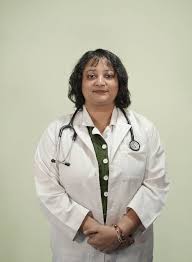
Course Mentor: Dr. Savita Jain
MBBS, MD (Medicine), DNB (Endocrinology)
Senior Consultant Endocrinologist
Dr. Savita Jain is a highly respected Senior Consultant Endocrinologist with over 15 years of rich clinical, academic, and research experience in managing complex endocrine and metabolic disorders. She completed her MBBS and MD (Medicine) from Dayanand Medical College & Hospital, Ludhiana, followed by a prestigious DNB in Endocrinology from Indraprastha Apollo Hospital, New Delhi — one of India’s leading endocrine training centres.
Dr. Savita has served in multiple renowned institutions across India, including Apollo Hospital (New Delhi), Mohandai Oswal Hospital (Ludhiana), and DEEP Hospital (Ludhiana), where she currently works as a Senior Consultant in Endocrinology. Her expertise spans diabetes, thyroid disorders, pituitary and adrenal diseases, osteoporosis, PCOS, metabolic bone disease, obesity, and hypoglycemia disorders.
She has authored several publications in national journals — including work on rheumatoid arthritis treatment practices, ulcerative colitis management, interferon-associated hearing loss, and rare endocrine conditions such as insulin autoimmune syndrome and tumour-induced osteomalacia. She has also contributed chapters to books on thyroid disease and PCOS.
Dr. Savita is an active member of leading medical bodies including the IMA, API, Indian Rheumatology Association, RSSDI, and the Endocrine Society of India. She has presented at numerous national conferences such as APICON, ESICON, RSSDI, EASD, and several specialty endocrine summits, reflecting her commitment to continuous learning and academic excellence.
Known for her clinical precision, evidence-based approach, and compassionate patient care, Dr. Savita brings deep expertise in endocrine diagnostics and test interpretation — making her an invaluable mentor for clinicians seeking advanced practical training in endocrinology.
How The Course Benifits You
🧠
Master Endocrine Test Interpretation Like a Specialist
Learn to confidently interpret complex thyroid, pituitary, adrenal, calcium/PTH, and metabolic tests using clear clinical algorithms.
🎯
Avoid Misdiagnosis & Improve Clinical Accuracy
Understand common lab pitfalls, assay errors, drug effects, and misleading patterns that often lead to incorrect or delayed diagnosis.
⚡
Make Faster, Evidence-Based Clinical Decisions
Receive ready-to-use frameworks for deciding when to test, how to interpret results, and what to do next in real-world practice.
🧩
Manage a Wider Range of Cases Independently
Expand your capability to handle thyroid disorders, adrenal dysfunction, PCOS, hypogonadism, calcium disorders, metabolic issues, and CGM interpretation — without unnecessary referrals.
🌟
Enhance Your Reputation as a Knowledgeable Clinician
Your improved diagnostic confidence and better treatment outcomes will strengthen patient trust and professional credibility.
⏰
Flexible Learning Designed for Busy Doctors
Short modules, practical examples, and mobile-accessible content allow you to upskill without disrupting your clinical schedule.
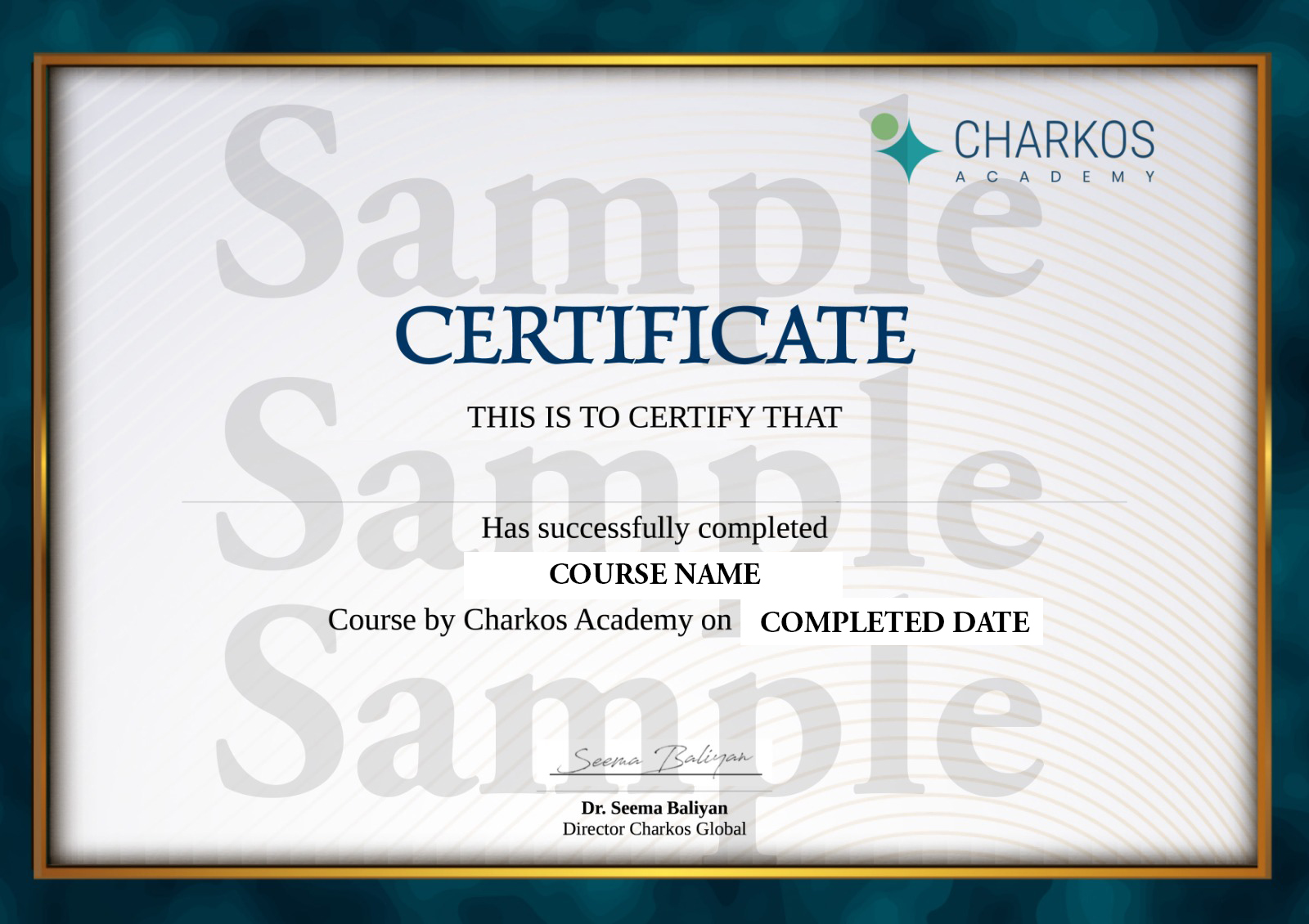
Get Certified By Charkos Academy!
Yes! You will get a course completion certificate by Charkos Academy once you complete the course and the assignment!
FAQ
Will this course help me in day-to-day clinical decision-making?
Absolutely. The curriculum focuses on real-world patterns, case-based examples, and practical algorithms, enabling you to apply endocrine test interpretation directly in your OPD or hospital practice.
Is there a certificate provided at the end of the course?
Yes. Upon completing all modules and passing the final assessment, you will receive a “Certificate in Practical Interpretation of Endocrine Tests for Clinicians” from Charkos Academy.
How are the classes delivered and what is the schedule like?
Modules are delivered through live online sessions (recorded as well) so you can learn at your own pace. Each module lasts 45–60 minutes, making it ideal for busy clinicians.
What makes this course different from other endocrinology or diabetology certificates?
Unlike generic courses, this programme focuses only on interpretation skills — TFTs, cortisol tests, pituitary panels, PTH-calcium, CGM, hyponatremia labs, adrenal workups, and assay pitfalls — giving you specialist-level diagnostic competence without requiring a fellowship.
Do I need prior endocrinology training to join this programme?
No. The course is designed to be practical and accessible, starting from foundational interpretation principles but progressing to advanced, specialist-level skills.
Who is this course designed for?
This course is created specifically for MBBS doctors, MD physicians, GPs, diabetologists, and early-career endocrine trainees who want to enhance their ability to interpret endocrine lab tests confidently in clinical practice.